





| Surgeon Name | GMC Code | Surgeon’s Activity |
|---|---|---|
| Wahid Abdul | 7265246 | H K |
| Fazal Muhammad Ali | 3400012 | K |
| Gillian Rebecca Aspinall | 4188726 | H K |
| Jeevan Chandrasenan | 6054810 | H K |
| Edward Samuel Holloway | 6128398 | H K |
| Hafiz Javaid Iqbal | 6058356 | K |
| Rathan Jeyapalan | 7139247 | H K |
| Jonathan David May | 6144571 | H A |
| Lois Ruth McGrath | 3486045 | H K |
| Matthew Morris | 4535359 | H K A |
| Aamer Nisar | 5202353 | H K |
| Pobbathi Parthasarathy | 2348801 | H S |
| Ganesh Prasad | 6079836 | H K E S |
| Vilas Narayan Sadekar | 7548181 | H |
| Shantanu Arvind Shahane | 4279479 | H K E S |
| apurv sinha | 6093672 | H E S |
| Michael Walsh | 6164476 | H |
| Philip Williams | 3119301 | H K |
| David Ian Wood | 6114896 | H K |
| John Edward Denham Wright | 4012450 | H K |
| Key : | |
|---|---|
| H | Hip surgery |
| K | Knee surgery |
| A | Ankle surgery |
| E | Elbow surgery |
| S | Shoulder surgery |

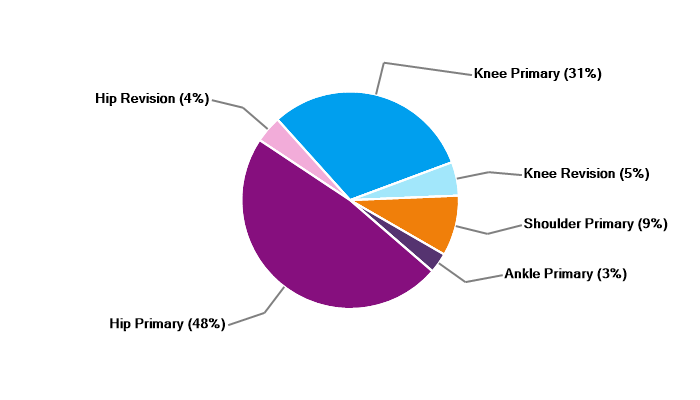
| Operation Type | Operation Subcategory | Procedures Recorded for this Hospital | National Average |
|---|---|---|---|
| Hip Primary | Hip hemiarthroplasty | 162 | 163 |
| Hip Primary | Total hip replacement | 210 | 294 |
| Hip Revision | - | 38 | 23 |
| Knee Primary | Total knee replacement | 225 | 302 |
| Knee Primary | Unicondylar Knee Replacement | 11 | 66 |
| Knee Revision | - | 25 | 18 |
| Ankle Primary | - | 30 | 8 |
| Elbow Primary | - | 5 | 6 |
| Shoulder Primary | - | 46 | 30 |
| Shoulder Revision | - | Fewer Than 5 | 4 |
| Total | 752+ | 914 |
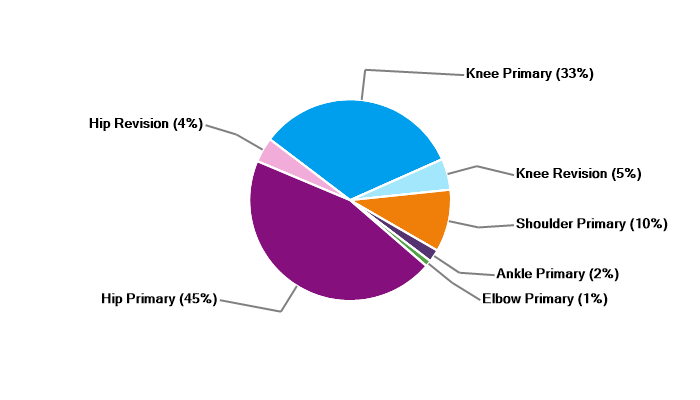
| Operation Type | Operation Subcategory | Procedures Recorded for this Hospital | National Average |
|---|---|---|---|
| Hip Primary | Hip hemiarthroplasty | 438 | 373 |
| Hip Primary | Total hip replacement | 692 | 868 |
| Hip Revision | - | 97 | 63 |
| Knee Primary | Focal Knee Replacement | Fewer Than 5 | 1 |
| Knee Primary | Total knee replacement | 665 | 852 |
| Knee Primary | Unicondylar Knee Replacement | 34 | 171 |
| Knee Revision | - | 101 | 51 |
| Ankle Primary | - | 77 | 19 |
| Ankle Revision | - | Fewer Than 5 | 5 |
| Elbow Primary | - | 10 | 14 |
| Shoulder Primary | - | 172 | 81 |
| Shoulder Revision | - | 7 | 9 |
| Total | 2293+ | 2507 |
This information display shows you how this hospital compares to the national rates for a range of patient outcomes measures used to demonstrate quality in joint replacement surgery. Against each measure you will be able to see whether this hospital is performing better than expected, within the expected range, or worse than expected for this type of surgery. This hospital is represented on the chart by a red triangle.
It is important to note that the types of patients a hospital treats and the procedures it carries out can explain variation in patient outcomes after surgery. Please click on the “How to interpret this chart” button for further information.
Patient outcomes, featured in the chart below, looks at mortality and revision. Please click on the “How to interpret this chart” button for further information including additional notes on factors that may affect the results shown including whether the hospital is providing a full and accurate submission of first-time joint replacement and revision operation data to the NJR.
Data for February 2016 - February 2026
 to find out more about the quality measure and its source data
| Patient Outcomes Quality Measure | This Hospital | Patient Records Analysed | This Hospital Ratio | National Ratio | 0
1
2
3
4
5
|
|---|---|---|---|---|---|
| 90 Day Mortality: Operations February 2021 - February 2026 |  Inside control limits Inside control limits | 795 | 1.03 | 1.00 |
|
| Revision Rate: Operations February 2016 - February 2026 | Inside control limits | 2207 | 1.02 | 1.00 |
|
| Revision Rate: Operations February 2021 - February 2026 | Inside control limits | 985 | 1.32 | 1.00 |
|
This information display shows overall characteristics for first-time hip replacement patients treated at this hospital between 1 April 2003 and 31 March 2026. Against each characteristic you will be able to see whether this hospital has treated a greater or fewer number of patients of a particular type. This hospital is represented on the chart by the black marker ( ).
).
The types of patients a hospital treats can explain variation in patient outcomes after surgery. Please click on the “How to interpret this chart” button for further information.
For hospitals in England and Wales, the NJR has collected information since 2003. For Northern Ireland since 2013, for the Isle of Man since 2015, for Guernsey since 2019 and for Jersey since 2025.Data for 1 April 2003 - 31 March 2026
to find out more about the quality measure and its source data
| Percentage Of Patients Who Were: | This Hospital | National Average | |
|---|---|---|---|
| Male | 38% | 40% |
|
| Under 60 years of age | 16% | 20% |
|
| Severely Obese (BMI of 35 or greater) | 19% | 13% |
|
| At higher risk of medical problems before or after Surgery (ASA 3+) | 31% | 22% |
|
| Diagnosed with conditions other than Osteoarthritis | 26% | 14% |
|
| NHS-funded | 81% | 81% |
|
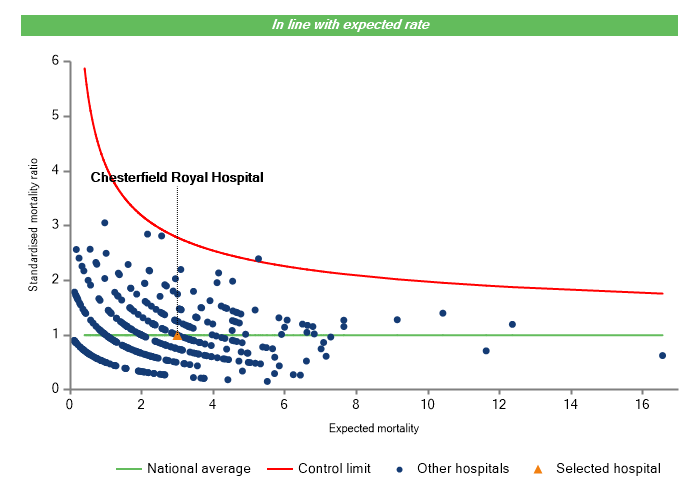
What does this mean?
This shows 90-day mortality following hip surgery for this hospital, based on the type of patients this hospital has seen.
The hospital you are reviewing is highlighted as an orange triangle. Progression along the horizontal axis (x axis) means that the hospital has done more cases and/or cases at a higher mortality risk such as older patients. Progression along the vertical axis (y axis) means the hospital has had more deaths.
The vertical axis figures are presented as a standardised mortality ratio. This means the values do not represent percentages of patients who have died, but they represent the proportion of deaths compared to the national average. The data is also ‘risk adjusted’ to take account of the fact that different hospitals may operate on more higher-risk or lower-risk patients e.g. because of demographics in the patient population they work with.
This information display shows you how this hospital compares to the national rates for a range of patient outcomes measures used to demonstrate quality in joint replacement surgery. Against each measure you will be able to see whether this hospital is performing better than expected, within the expected range, or worse than expected for this type of surgery. This hospital is represented on the chart by a red triangle.
It is important to note that the types of patients a hospital treats and the procedures it carries out can explain variation in patient outcomes after surgery. Please click on the “How to interpret this chart” button for further information.
Patient outcomes, featured in the chart below, looks at mortality and revision. Please click on the “How to interpret this chart” button for further information including additional notes on factors that may affect the results shown including whether the hospital is providing a full and accurate submission of first-time joint replacement and revision operation data to the NJR.
Data for February 2016 - February 2026
to find out more about the quality measure and its source data
| Patient Outcomes Quality Measure | This Hospital | Patient Records Analysed | This Hospital Ratio | National Ratio | 0
1
2
3
4
5
|
|---|---|---|---|---|---|
| 90 Day Mortality: Operations February 2021 - February 2026 | Inside control limits | 898 | 1.24 | 1.00 |
|
| Revision Rate All Knees: Operations February 2016 - February 2026 | Inside control limits | 2331 | 1.16 | 1.00 |
|
| Revision Rate Total Knee replacement: Operations February 2016 - February 2026 | Inside control limits | 2225 | 1.29 | 1.00 |
|
| Revision Rate Unicondylar Knees: Operations February 2016 - February 2026 | Inside control limits | 104 | 0.91 | 1.00 |
|
| Revision Rate: Operations February 2021 - February 2026 |  Outside control limits Outside control limits | 915 | 2.14 | 1.00 |
|
This information display shows overall characteristics for first-time knee replacement patients treated at this hospital between 1 April 2003 and 31 March 2026. Against each characteristic you will be able to see whether this hospital has treated a greater or fewer number of patients of a particular type. This hospital is represented on the chart by the black marker ().
The types of patients a hospital treats can explain variation in patient outcomes after surgery.
For hospitals in England and Wales, the NJR has collected information since 2003. For Northern Ireland since 2013, for the Isle of Man since 2015, for Guernsey since 2019 and for Jersey since 2025.
Please click on the “How to interpret this chart” button for further information.
Data for 1 April 2003 - 31 March 2026
to find out more about the quality measure and its source data
| Percentage Of Patients Who Were: | This Hospital | National Average | |
|---|---|---|---|
| Male | 44% | 44% |
|
| Under 60 years of age | 18% | 16% |
|
| Severely Obese (BMI of 35 or greater) | 32% | 23% |
|
| At higher risk of medical problems before or after Surgery (ASA 3+) | 25% | 19% |
|
| Diagnosed with conditions other than Osteoarthritis | 8% | 4% |
|
| NHS-funded | 77% | 84% |
|
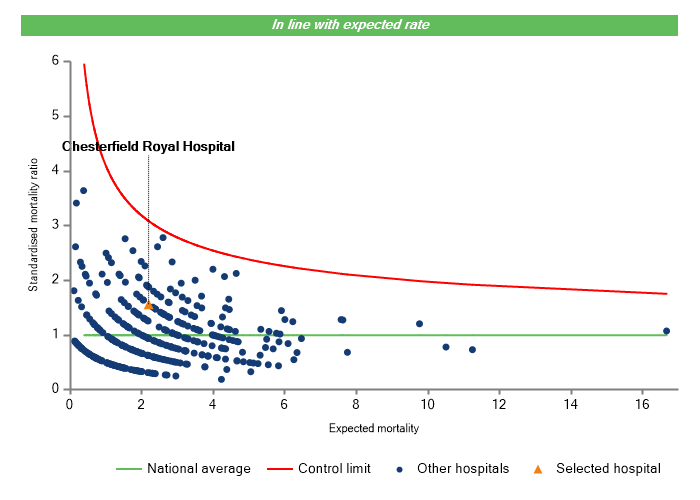
What does this mean?
This shows 90-day mortality following knee surgery for this hospital, based on the type of patients this hospital has seen.
The hospital you are reviewing is highlighted as an orange triangle. Progression along the horizontal axis (x axis) means that the hospital has done more cases and/or cases at a higher mortality risk such as older patients. Progression along the vertical axis (y axis) means the hospital has had more deaths.
The vertical axis figures are presented as a standardised mortality ratio. This means the values do not represent percentages of patients who have died, but they represent the proportion of deaths compared to the national average. The data is also ‘risk adjusted’ to take account of the fact that different hospitals may operate on more higher-risk or lower-risk patients e.g. because of demographics in the patient population they work with.
This information display shows overall characteristics for first-time ankle replacement patients treated at this hospital between 1 April 2010 and 31 March 2026. Against each characteristic you will be able to see whether this hospital has treated a greater or fewer number of patients of a particular type. This hospital is represented on the chart by the black marker ().
The types of patients a hospital treats can explain variation in patient outcomes after surgery.
Note: Data submission for Northern Ireland hospitals started in February 2013, for the Isle of Man in July 2015, for Guernsey in November 2019 and for Jersey in 2025.
Please click on the “How to interpret this chart” button for further information.
Data for 1 April 2010 - 31 March 2026
to find out more about the quality measure and its source data
| Percentage Of Patients Who Were: | This Hospital | National Average | |
|---|---|---|---|
| Male | 61% | 61% |
|
| Under 60 years of age | 24% | 19% |
|
| Severely Obese (BMI of 35 or greater) | 24% | 14% |
|
| At higher risk of medical problems before or after Surgery (ASA 3+) | 16% | 19% |
|
| Diagnosed with conditions other than Osteoarthritis | 8% | 11% |
|
| NHS-funded | 100% | 81% |
|
This information display shows overall characteristics for first-time elbow replacement patients treated at this hospital between 1 April 2012 and 31 March 2026. Against each characteristic you will be able to see whether this hospital has treated a greater or fewer number of patients of a particular type. This hospital is represented on the chart by the black marker ().
The types of patients a hospital treats can explain variation in patient outcomes after surgery.
Note: Data submission for Northern Ireland hospitals started in February 2013, for the Isle of Man in July 2015, for Guernsey in November 2019 and for Jersey in 2025.
Note: BMI data submission for Elbows started in June 2018.
Please click on the How to interpret this chart button for further information.
Data for 1 April 2012 - 31 March 2026
to find out more about the quality measure and its source data
| Percentage Of Patients Who Were: | This Hospital | National Average | |
|---|---|---|---|
| Male | 30% | 33% |
|
| Under 60 years of age | 34% | 39% |
|
| Severely Obese (BMI of 35 or greater) | 25% | 18% |
|
| At higher risk of medical problems before or after Surgery (ASA 3+) | 11% | 28% |
|
| Diagnosed with conditions other than Osteoarthritis | 91% | 88% |
|
| NHS-funded | 100% | 97% |
|
This information display shows overall characteristics for first-time shoulder replacement patients treated at this hospital between 1 April 2012 and 31 March 2026. Against each characteristic you will be able to see whether this hospital has treated a greater or fewer number of patients of a particular type. This hospital is represented on the chart by the black marker ().
The types of patients a hospital treats can explain variation in patient outcomes after surgery.
Note: Data submission for Northern Ireland hospitals started in February 2013, for the Isle of Man in July 2015, for Guernsey in November 2019 and for Jersey in 2025.
Note: BMI data submission for Shoulders started in June 2018.
Please click on the How to interpret this chart button for further information.
Data for 1 April 2012 - 31 March 2026
to find out more about the quality measure and its source data
| Percentage Of Patients Who Were: | This Hospital | National Average | |
|---|---|---|---|
| Male | 27% | 31% |
|
| Under 60 years of age | 8% | 11% |
|
| Severely Obese (BMI of 35 or greater) | 24% | 18% |
|
| At higher risk of medical problems before or after Surgery (ASA 3+) | 37% | 33% |
|
| Diagnosed with conditions other than Osteoarthritis | 69% | 48% |
|
| NHS-funded | 100% | 89% |
|
This information display shows whether this hospital is submitting all the data they should to the NJR (compliance), whether those records have corresponding patient details (patient consent) and whether the records have a valid NHS or national patient number. This is important so that the NJR can measure how long implants last and look at other areas of surgical performance.
The display also shows a result for data entry delay. This indicates whether the hospital is submitting their information in a timely way. This is important so that the NJR can report an accurate and full picture of performance to hospitals, the surgeons who work there as well as to patients and the public.
This hospital is represented on the chart by the black marker (). Please click on the “How to interpret this chart” button for further information.
Compliance data for 1 January 2025 – 31 December 2025
All other data for 1 April 2025 – 31 March 2026
to find out more about the quality measure and its source data
| Quality Measure | This Hospital | National Expected | ||
|---|---|---|---|---|
| Compliance (for the Trust) | As Expected | 83.3% | 95.0% |
|
| Revision Compliance (for the Trust) |  Better Than Expected Better Than Expected | 95.7% | 95.0% |
|
| Trauma consent rate | Better Than Expected | 95.8% | 90.0% |
|
| Elective consent rate | Better Than Expected | 99.3% | 90.0% |
|
| Valid NHS number | As Expected | 84.9% | 95.0% |
|
| Time taken to enter data | Worse Than Expected | 125 Days | 30 Days |
|

